Welcome to curated list of handpicked free online resources related to IT, cloud, Big Data, programming languages, Devops. Fresh news and community maintained list of links updated daily. Like what you see? [ Join our newsletter ]

Introducing Kubewarden, an open source policy engine

Categories

Tags open-source kubernetes software containers devops infosec

Security has always been a wide and complex topic. A recent survey from StackRox about the state of containers and Kubernetes security provides some interesting data on these topics. By Flavio Castelli.

In this blog post, author will dive into some of the findings in that survey and introduce you to Kubewarden, an open source policy engine. The article deals with:

  • Security measures and skills are lacking
  • Challenges with writing security policies
  • A way around the security policy learning curve
  • Introducing Kubewarden: An open source policy engine for Kubernetes
  • Creating, building and running Kubewarden security policies
  • Distributing security policies with Kubewarden

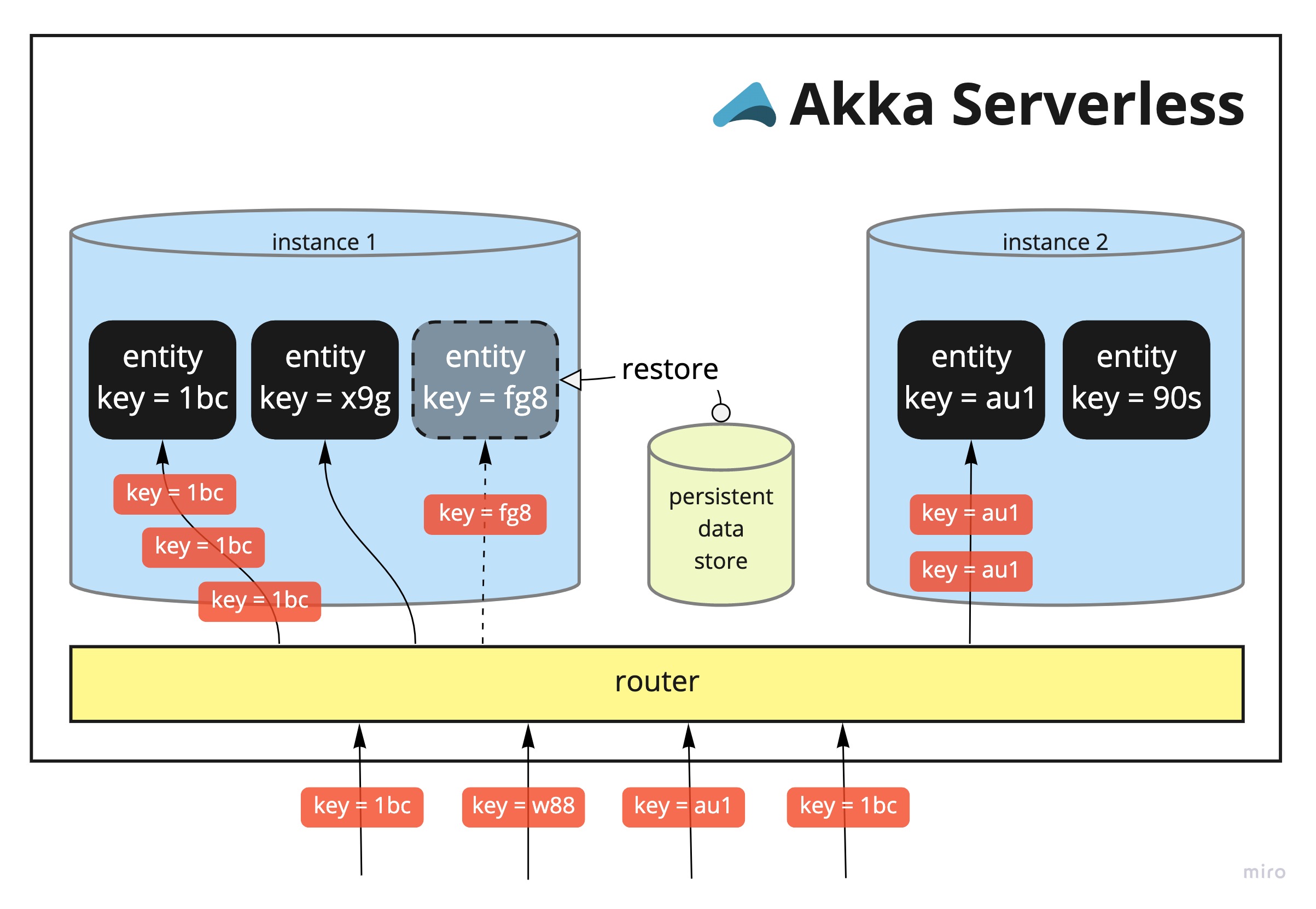
Kubewarden is an open-source policy engine. It integrates with Kubernetes using the widely adopted Webhook Admission Control mechanism. The project provides a set of Kubernetes Custom Resources that simplify the process of enforcing policies on a cluster. Kubewarden differentiates itself in the way it creates, distributes and executes policies. For starters, Kubewarden policies can be written in almost any programming language. This is possible because Kubewarden leverages the power of WebAssembly.

You will also get links to further reading. Nice one!

[Read More]

The 10 best practices for remote software engineering

Categories

Tags agile software miscellaneous teams management cio

At face value, when we think of developer productivity we might think of effectiveness in time management, communication, and task completion. By Vanessa Sochat.

The problem is that accomplishing tasks or having a filled up schedule does not necessarily equate to productivity. Creating a formulaic working strategy, as was common in the last century, does not either.

Although we are drawn to personal workflow or time management tools, and learning secrets to improving our productivity, ironically this quest for the holy grail can sometimes take us off course and be a detriment to our productivity.

The author’s view and experience how she has slowly learned to optimize her own productivity by focusing exclusively on well-being:

  • Work on things you care about
  • Define goals for yourself
  • Define productivity for yourself
  • Establish routine and environment
  • Take responsibility for your work
  • Take responsibility for human connection
  • Practice empathetic review
  • Learn to Say Yes, No, and Not Anymore
  • Choose correct communication channels

… and much more. It goes without saying that a core ingredient to happiness, and thus productivity, is working on projects or software that you care about. You will find many usefully details on the topic n this article. Really good!

[Read More]

Product analytics at startups

Categories

Tags analytics software startups cio management

A solid product analytics stack is the foundation of data-driven culture. Behavioral data enables a development team to track results, connect feature improvements to outcomes, and measure progress to inform decision making. By Julia Enthoven and Shah Ahmed.

In this article, authors want to share our research about how tech startups measure and track user behavior. The artticle describes:

  • Kapwing’s product analytics
  • Year 0: Bootstrapping
  • Year 1: Google Analytics
  • Year 2: Amplitude
  • What do other startups do for product analytics?
  • How to enforce good product analytics practices at a startup

Product insights supercharge a product team and strengthen a fundraising narrative, making it easier to achieve product market fit and increase the value of your business. But hasty implementations and over-instrumentation can negate these benefits and make your dashboards unintelligible. Good read!

[Read More]

Extreme HTTP performance tuning: 1.2M API req/s on 4 vCPU EC2 instance

Categories

Tags performance aws devops json programming cloud apis

This post will walk you through the performance tuning steps that I took to serve 1.2 million JSON “API” requests per second from a 4 vCPU AWS EC2 instance. For the purposes of this recreated quest, we will ignore most of the dead ends and dark alleyways that I had to struggle through on my solo expedition. By Marc Richards.

You will find a table in the article which lists the 9 optimization categories that author will cover, and links to the corresponding flame graphs.

libreactor vs the world fully optimised

Source: @talawah.io https://talawah.io/blog/extreme-http-performance-tuning-one-point-two-million/

The article then reads about:

  • Basic benchmark setup
  • Ground Zero
  • Flame Graphs
  • Application Optimizations
  • Framework Optimizations
  • Speculative Execution Mitigations
  • Syscall Auditing/Blocking
  • Disabling iptables/netfilter

… and much more. This is an extensive overview oof various optimisation techniques with detailed explanation what and why is happening during the test runs. Tether is plenty links provided for further reading and for learning more about Linux kernel and network stack. Nice one!

[Read More]

SSL with Spring WebFlux and Vault PKI

Categories

Tags infosec java programming

In this article, you will learn how to configure the Vault PKI engine and integrate it with Spring WebFlux. By Piotr Minkowski.

With Vault PKI you can easily generate X.509 certificates signed by the CA. Then your application may get a certificate through a REST API. Its TTL is relatively short. It is unique per each application instance. Also, we can use Spring VaultTemplate to simplify integration with Vault API.

The article content then captures:

  • Source code
  • Running Vault
  • Enable and configure Vault PKI
  • Integrating Spring WebFlux with Vault PKI
  • Enable Spring WebFlux security
  • Testing Spring WebFlux with Vault PKI

Vault allows you to secure, store, and control access to tokens, passwords, certificates, and encryption keys using UI, CLI, or HTTP API. It is a really powerful tool. With Vault, instead of a traditional approach, you can manage your security in a more dynamic, cloud-native way. Good read!

[Read More]

Putting digital at the heart of strategy

Categories

Tags agile management teams cio miscellaneous

When everyone is digital, strategy is the differentiator. Before long, every business will be a digital business. CEOs must make explicit choices about their strategy to win in a digital economy. By Ragu Gurumurthy, Rich Nanda, David Schatsky @deloitte.

For every organization, therefore, a strategic approach to digital transformation is crucial. Digital possibilities must shape strategy. And strategy must shape digital priorities.

The article content is split into:

  • Digital possibilities must shape strategy
  • Digital helps organizations thrive amid uncertainty and change
  • Digital enables new ways to differentiate
  • All strategy must be digital strategy
  • Digital transformation is a journey that never ends

Strategy guides technology investment. Strategic intent—the capabilities and management systems needed to compete—must inform an organization’s technology choices, architecture, and spend.

This report is based on a global survey involving 2,860 executives sampled across industries. Responses from US executives were collected in November 2020; responses from executives in Asia-Pacific and European countries (China, India, Japan, France, Spain, and the United Kingdom) were later collected from January to February 2021 (figure 11 has a breakdown of respondents by region). Interesting read!

[Read More]

Deep learning for NLP: Creating a chatbot with Python & Keras!

Categories

Tags python big-data data-science machine-learning robotics

Learn how Deep Learning can be used for NLP and create a simple Chatbot with Python and Keras. Who doesn’t like a friendly-robotic personal assistant? By howtolearnmachinelearning.com.

The post will cover how to use Keras, a very popular library for neural networks to build a simple Chatbot. The main concepts of this library will be explained, and then we will go through a step-by-step guide on how to use it to create a yes/no answering bot in Python.

Further in the article you will get:

  • Keras: Easy neural networks in Python
  • The Project: Using recurrent neural networks to build a chatbot
  • The data: Stories, questions and answers
  • Deep learning for NLP: The neural network & building the model
  • Deep learning for NLP: Learning from the data & training the model
  • Seeing the results: Testing and playing
  • Other resources about deep learning for NLP, Python & Keras

If you want to go deeper into attention models, or understand some word vectorizing techniques also check out additional resources put together for you in article. Enjoy!

[Read More]

Streaming microservices with ZIO and Kafka

Categories

Tags devops microservices event-driven messaging software-architecture distributed

The design and implementation of distributed and highly concurrent applications is something we do every day at Scalac. The adoption of distributed systems is a trend that is currently growing, and it’s not going to stop. Apart from Kubernetes, Apache Kafka is surely the main reason for this. By Aleksandar Skrbic.

Ingestion of large-scale data, resilience to data loss and corruption, replication, and easily achievable parallelism via consumer groups are some of the main reasons why Kafka is one of the most important tools for building distributed systems.

Functional streams, as an abstraction, are commonly used to elegantly solve problems in the area of concurrency and the processing of unbounded data, making resource safety and CPU utilization the priority.

The article then describes:

  • Scala, ZIO and finally Apache Kafka
  • ZIO Streams
  • ZIO Kafka
  • Microservices with ZIO and Kafka

Article makes a good job of explaining what ZIO is and how to use it in combination with ZIO Streams to write purely functional event-driven microservices. I hope that some major advantages of functional streaming libraries presented in this article are enough for you to be able to start introducing them into your projects. Nice one!

[Read More]

A different way to work with external SVG

Categories

Tags css web-development frontend programming

SVGs are awesome: they are small, look sharp on any scale, and can be customized without creating a separate file. However, there is something I feel is missing in web standards today: a way to include them as an external file that also retains the format’s customization powers. By Shubham Jain.

For instance, let’s say you want to use your website’s logo stored as web-logo.svg. You can do:

<img src="/images/logo.svg" />

That’s fine if your logo is going to look the same everywhere. But in many cases, you have 2-3 variations of the same logo.

To address this, author has created a library called svg-loader. Simply put, it fetches the SVG files via XHR and loads them as inline elements, allowing you to customize the properties like fill and stroke, just like inline SVGs.

This approach may feel unorthodox because it introduces a JavaScript dependency and there are already multiple ways to use SVGs, including inline and from external sources. But there’s a good case for using SVGs this way. Let’s examine them by answering the common questions. Follow the link for the full break down. Nice one!

[Read More]

5 feedback loops that avoid software architecture chaos

Categories

Tags software-architecture devops cio management cloud

Product development can be chaotic these days. Planning for these five challenges helps avoid them. By Jim Tyrrell (Red Hat).

According to PWC, one-third of users are unlikely to use any product from a company after one bad experience. That shift in bug tolerance by the developer and change in expectations from the user can lead to chaos.

This challenge of delivering technology-centered compelling experiences that do not require costly support while balancing the needs of past and future development is what author calls the Software Chaos Loop, and it affects most software delivery organizations.

The modern software delivery organization has a solid CI/CD infrastructure and can push an update to production in minutes. This same pipeline can take in upstream library updates and block zero-day exploits. At scale, delivery systems can simultaneously ingest and update software from the hundreds of projects typical to modern application architecture. The scale is incredible.

The article then captures the following:

  • Focus the backlog on experiences
  • Complete unit and integration testing
  • User research focused on users
  • Focus on differentiation
  • Behavior economics, from adoption to end of life

The Software Chaos Loop affects many software development organizations and prevents them from delivering better products. It also reduces the amount of rework and revisiting of past deliverables that are required.

[Read More]